
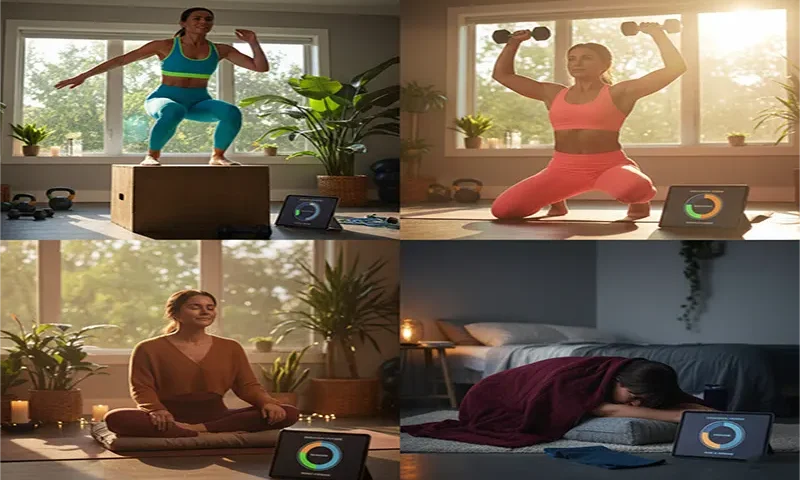
For many beginners, “consistency” feels like a constant battle against their own bodies. You might feel like a powerhouse one Monday, only to feel completely exhausted and weak the following week. This isn’t a failure of willpower—it’s biology.
By understanding the four phases of the menstrual cycle, you can stop fighting your physiology and start using it to reach your fitness goals. Here is how to build strength from the comfort of your living room, guided by your internal clock.
1. Phase One: The Menstrual Phase (Days 1–5)
The Vibe: “Reflect and Reset”
During the first few days of your period, estrogen and progesterone are at their lowest. Your body is working hard on menstruation, which can lead to lower energy and cramping.
- The Science: You may feel more fatigued, but some studies suggest your body is actually better at accessing stored carbohydrates during this time, meaning short bursts of movement can feel okay once you get started.
- The Workout Strategy: Focus on low-impact strength and mobility.
- At-Home Exercises:
- Bodyweight squats (slow and controlled).
- Cat-cow and child’s pose for pelvic relief.
- Glute bridges.
- The Goal: Maintenance. If you’re in significant pain, rest is a productive part of training.
2. Phase Two: The Follicular Phase (Days 6–12)
The Vibe: “The Upward Climb”
As your period ends, estrogen begins to rise. This is your “re-entry” phase. You’ll likely notice your mood lifting and your stamina returning.
- The Science: Rising estrogen is linked to increased insulin sensitivity and muscle building. This is the time to start increasing the challenge.
- The Workout Strategy: Progressive Overload. Start adding resistance (dumbbells, kettlebells, or even heavy water bottles) to your movements.
- At-Home Exercises:
- Push-ups (on knees or full).
- Lunges.
- Plank variations.
- The Goal: Building a foundation. Aim for 3 sets of 10–12 reps.
3. Phase Three: The Ovulatory Phase (Days 13–15)
The Vibe: “Peak Performance”
This is a short window where estrogen peaks and testosterone makes a brief, helpful appearance. You are likely at your strongest and most energetic.
- The Science: Research suggests that strength gains may be most significant during the late follicular and ovulatory phases. However, be mindful: high estrogen can slightly increase ligament laxity, so form is paramount to avoid injury.
- The Workout Strategy: High Intensity & Heavy Loads. If you have weights at home, use the heaviest ones you can safely manage.
- At-Home Exercises:
- Dumbbell deadlifts.
- Overhead presses.
- Mountain climbers or Burpees for a metabolic boost.
- The Goal: Hit your “Personal Bests.” This is the time to push for that extra rep.
4. Phase Four: The Luteal Phase (Days 16–28)
The Vibe: “The Slow Down”
Progesterone takes the lead here. Your core body temperature rises, and your heart rate may be slightly higher at rest. You might feel more “breathless” during exercise.
- The Science: In the late luteal phase (the week before your period), your body shifts toward using more fat for fuel, but muscle protein breakdown can also increase.
- The Workout Strategy: Strength Endurance and Recovery. Transition from heavy weights to higher repetitions with lighter weights.
- At-Home Exercises:
- Bird-dogs and Dead bugs (core stability).
- Wall sits.
- Yoga-inspired strength (Down Dog to Plank flows).
- The Goal: Consistency without burnout. Listen to your body—if you feel “clumsy” or hot, dial back the intensity.
Comparison of Cycle Phases and Training Focus
| Phase | Main Hormone | Energy Level | Training Focus |
| Menstrual | Low Estrogen/Progesterone | Low | Rest / Mobility |
| Follicular | Rising Estrogen | Increasing | Strength Building |
| Ovulatory | Peak Estrogen/Testosterone | High | Max Effort / Power |
| Luteal | High Progesterone | Declining | Endurance / Stability |
Tips for Beginner Success
- Track Your Cycle: Use an app or a paper journal to note not just your period, but your energy levels and “strength feel” each day.
- Invest in Basic Gear: You don’t need a gym. A set of resistance bands and one pair of medium-weight dumbbells (e.g., 5kg to 8kg) are enough to start.
- Protein is Key: Regardless of the phase, muscle repair requires protein. Aim for a serving of protein (tofu, eggs, chicken, or beans) after your workout.
- Hydration: Progesterone can affect fluid balance. Drink plenty of water, especially during the Luteal phase when you sweat more easily.
Summary
Cycle-informed training isn’t about being “weak” during certain weeks; it’s about training smarter. By pushing hard when your hormones support growth and pulling back when your body needs recovery, you create a sustainable habit that prevents the “all-or-nothing” burnout cycle.

