
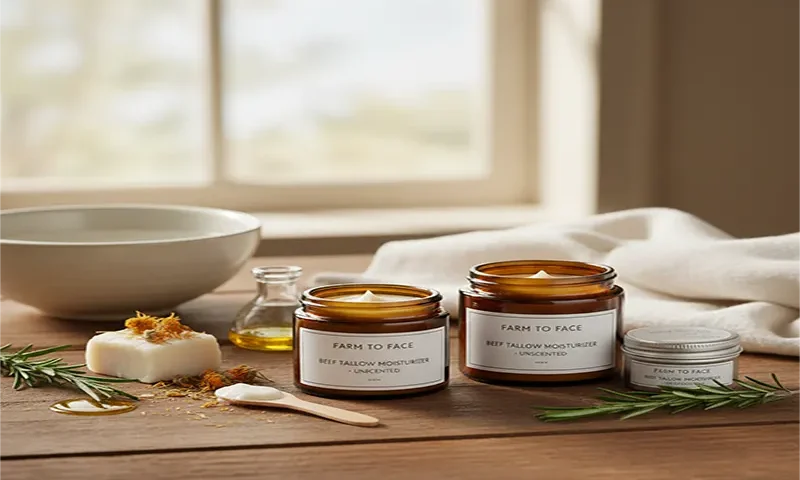
The “Bio-Identical” Secret: Why Tallow Works
The word “sebum” (the oil our skin produces) is actually the Latin word for “tallow.” This isn’t a coincidence. Beef tallow is uniquely compatible with human skin because its fatty acid profile is strikingly similar to our own.
Unlike plant-based oils (like almond or jojoba) which have different molecular structures, tallow is bio-identical. This means that for individuals with sensitive skin—whose skin barriers are often compromised—tallow doesn’t just sit on the surface; it integrates. It speaks the same “biological language” as your skin cells, allowing for deep absorption without the irritation often caused by synthetic emulsifiers.
The Nutrient Profile of Grass-Fed Tallow
When we talk about tallow for skin, we aren’t talking about the byproduct of a fast-food burger. We are talking about rendered suet from 100% grass-fed, pasture-raised cattle. This specific source is a powerhouse of fat-soluble vitamins that are nearly impossible to find in such high concentrations in plant oils:
- Vitamin A (Retinol): Encourages collagen production and cell turnover. Unlike synthetic retinol, the Vitamin A in tallow is gentle enough for sensitive skin.
- Vitamin D: Helps with skin cell repair and supports the skin’s immune function.
- Vitamin E: A potent antioxidant that protects skin from UV damage and oxidative stress.
- Vitamin K: Known for reducing redness and helping with the appearance of bruising or broken capillaries.
- Conjugated Linoleic Acid (CLA): Only found in high amounts in grass-fed animals, CLA has powerful anti-inflammatory properties—a godsend for those with eczema or rosacea.
Tallow vs. Conventional Moisturizers
Most commercial moisturizers for sensitive skin are “water-based.” While water sounds hydrating, these products require preservatives (like parabens) to prevent mold growth and emulsifiers to keep the oil and water mixed. For people with reactive skin, these additives are often the primary cause of breakouts and rashes.
| Feature | Conventional Moisturizer | Grass-Fed Beef Tallow |
| Ingredients | 20+ (often synthetic) | 1–3 (completely natural) |
| Skin Compatibility | Sits on top (occlusive) | Absorbs deeply (bio-identical) |
| Preservatives | Necessary (chemical) | None needed (shelf-stable fat) |
| Nutrient Density | Synthetic additives | Naturally occurring Vitamins A, D, E, K |
Benefits for Sensitive and Reactive Skin
If you suffer from conditions like eczema, psoriasis, or perioral dermatitis, your skin barrier is likely “leaky.” It loses moisture too fast and lets irritants in.
- Barrier Repair: Tallow contains palmitoleic acid, an omega-7 fatty acid that is a natural building block of our skin. Applying it helps “seal” the cracks in the skin barrier.
- Anti-Microbial Properties: Tallow contains stearic and oleic acids, which are naturally antimicrobial. This helps keep skin clear without the harshness of benzoyl peroxide or alcohols.
- Low Allergen Profile: Because it is a pure animal fat without the complex proteins found in nuts or the fragrances found in flowers, it is one of the least “reactive” substances you can put on your face.
How to Use Tallow in Your Daily Routine
A little goes a long way. Because tallow is 100% lipids (fats) and contains no water, you only need a pea-sized amount for your entire face.
- The Damp Skin Method: For the best results, apply tallow to slightly damp skin. This helps “trap” the moisture on your face, allowing the tallow to seal it in.
- Whipped vs. Balm: You will often find tallow sold as “Whipped Tallow.” This has been aerated to give it a light, fluffy texture that spreads easily. A “Balm” is denser and better for targeted dry spots like elbows or cracked heels.
- Night Treatment: If you are worried about looking “greasy,” use it as a night cream. You will wake up with skin that feels plump and hydrated rather than oily.
Sourcing: The “Grass-Fed” Non-Negotiable
If you are using tallow for its non-toxic benefits, the source is everything.
- Grain-fed tallow has a different fatty acid profile and significantly less Vitamin E and CLA.
- Toxins (like pesticides from grain) are stored in animal fat. To ensure your moisturizer is truly non-toxic, always look for “100% Grass-Fed and Finished” on the label.
Does it Smell?
Pure, rendered tallow has a very faint, “earthy” scent. Most high-quality skincare brands will “purify” the tallow multiple times using a salt-water render to remove the beefy aroma. Some brands add essential oils like lavender or frankincense, but if your skin is extremely sensitive, unscented is the safest path.
Summary
Beef tallow is a return to a simpler, more effective form of skincare. It provides the deep, vitamin-rich nourishment that sensitive skin craves without the hidden chemicals found in modern drugstore bottles. By switching to a tallow-based moisturizer, you aren’t just hydrating your skin—you are feeding it.

